The Threshold
Part three of the Agile Finance series. "Are we agile enough?" is the wrong question. Agility is relative to the volatility of the world you're modelling, and the real threshold is whether finance leads operational decisions by exactly one cycle. One beat ahead, never two.
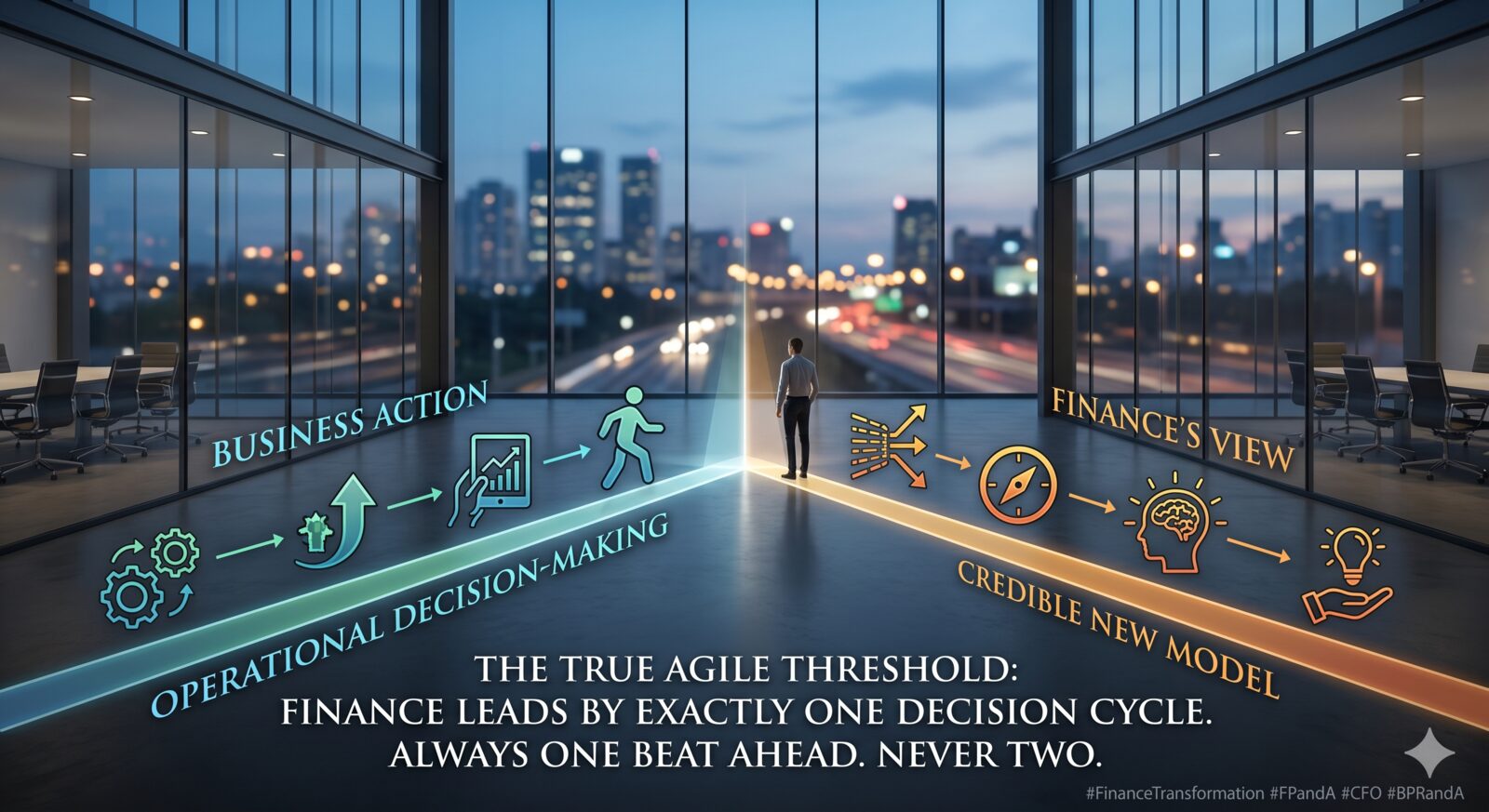
"Are we agile enough?" is the wrong question.
The right one: are we keeping pace with the world we're modelling?
Agility is relative
Agility is relative, not absolute.
Low volatility, low need
A utility with regulated revenue streams doesn't need 24-hour replanning.
High volatility, high need
An oil major facing $20 commodity swings absolutely does.
A Norwegian E&P that produces a new medium-term plan in three days is more agile than a SaaS company producing one in two, because the volatility of its environment is higher.
Who is waiting on whom
This reframes the threshold question entirely. The test is not "how fast is our planning cycle." The test is: between the moment the business needs to act and the moment finance can produce a credible new view of the world, who is waiting on whom?
Finance is the bottleneck
If operations is consistently waiting on finance, finance is non-agile relative to its own organisation.
Finance is over-investing
If finance is consistently producing analyses nobody acts on, it's over-investing in agility relative to organisational decision capacity.
The sweet spot is when finance leads operational decision-making by exactly one decision cycle. Always one beat ahead. Never two.
The gap nobody measures
Most finance leaders we work with have never measured this. They measure cycle time, headcount, days-to-close. They do not measure the gap between "the world changed" and "we acted on it."
That gap is the only threshold that matters.
One diagnostic
If you want one diagnostic to take into your next leadership meeting, it's this:
Pick the last three material decisions the business made. For each one, ask whether finance accelerated the decision, kept pace with it, or slowed it down.
The honest answer tells you where you stand.
One beat ahead
Close the gap between "the world changed" and "we acted on it": a credible new view of the business in hours, while the decision still matters. That's what we're building toward with Novi. Join early access to follow the series and the work.