The Blog
Long reads on financial modelling and FP&A, conversations with the founders, and the thinking behind the platform, beginning with the manifesto we wrote on the very first day.
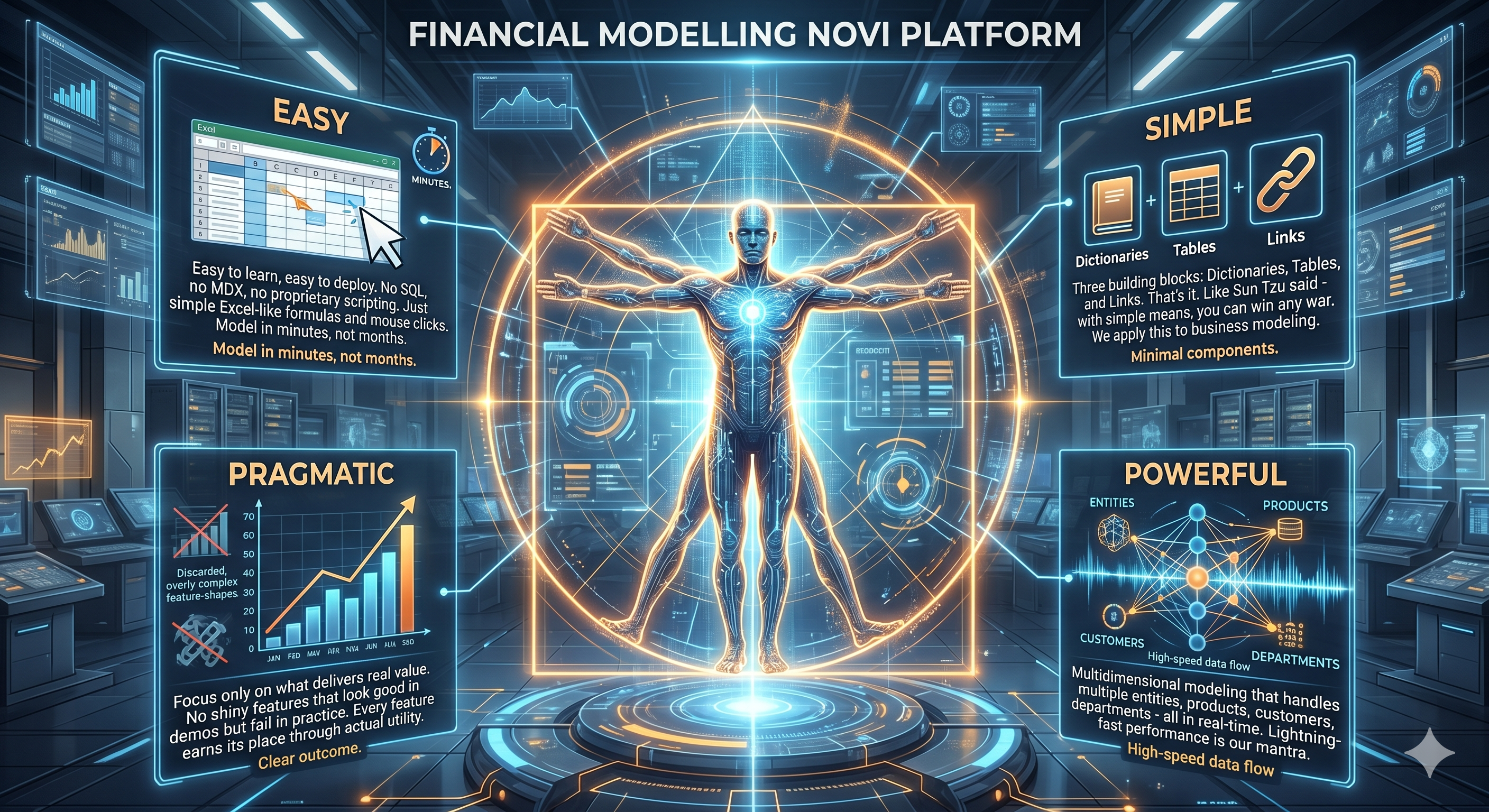
The Novi Manifesto
The very first page we ever wrote, back when this was still SFMT. Four principles (Easy, Simple, Pragmatic, Powerful) that still run the whole platform today.

What’s new in Novi: August 2026
Novi now reaches into your own network without asking you to open it. The Novi Gateway runs your extracts on your side of the boundary and sends out only the result: no port to open, no database to expose, no inbound firewall rule. Plus Quick Upload, CLARA working by proposal, links that carry calculated results, and a month of smaller things.

Modelling a manufacturer
A pot of yoghurt sits seven recipe levels above a milk tanker, on a cost-centre rate that depends on the plan that depends on the rate, above a joint-cost split where the arithmetic reverses direction and the ratio is itself a forecast. Scale it to twenty plants and six hundred thousand codes and the hard number isn't the cell count, it's how far one changed price has to travel. From bill of materials to P&L, and why manufacturing is where a model stops being a spreadsheet and becomes a system.

ARR is not revenue
Every subscription business leads with ARR, and it appears nowhere in the financial statements: not audited, governed by no standard, and not revenue. Revenue is a flow, recognised under ASC 606 as the service is delivered. ARR is a stock, defined by management with no rulebook at all. The four places they diverge, why almost no two of 136 listed SaaS companies calculate ARR the same way, and why explaining the gap is the actual deliverable.

The Headcount Plan
Most lines in a model are abstractions: revenue is a curve, opex a category. The headcount plan is the one where the cells have names. It's the heaviest line in the model (people are usually the largest cost a business carries) and the most fragile (alone among the schedules, its cells are decisions about people's lives), and the two facts are connected. How to model it honestly, and what changes when the roster and the P&L are one structure.
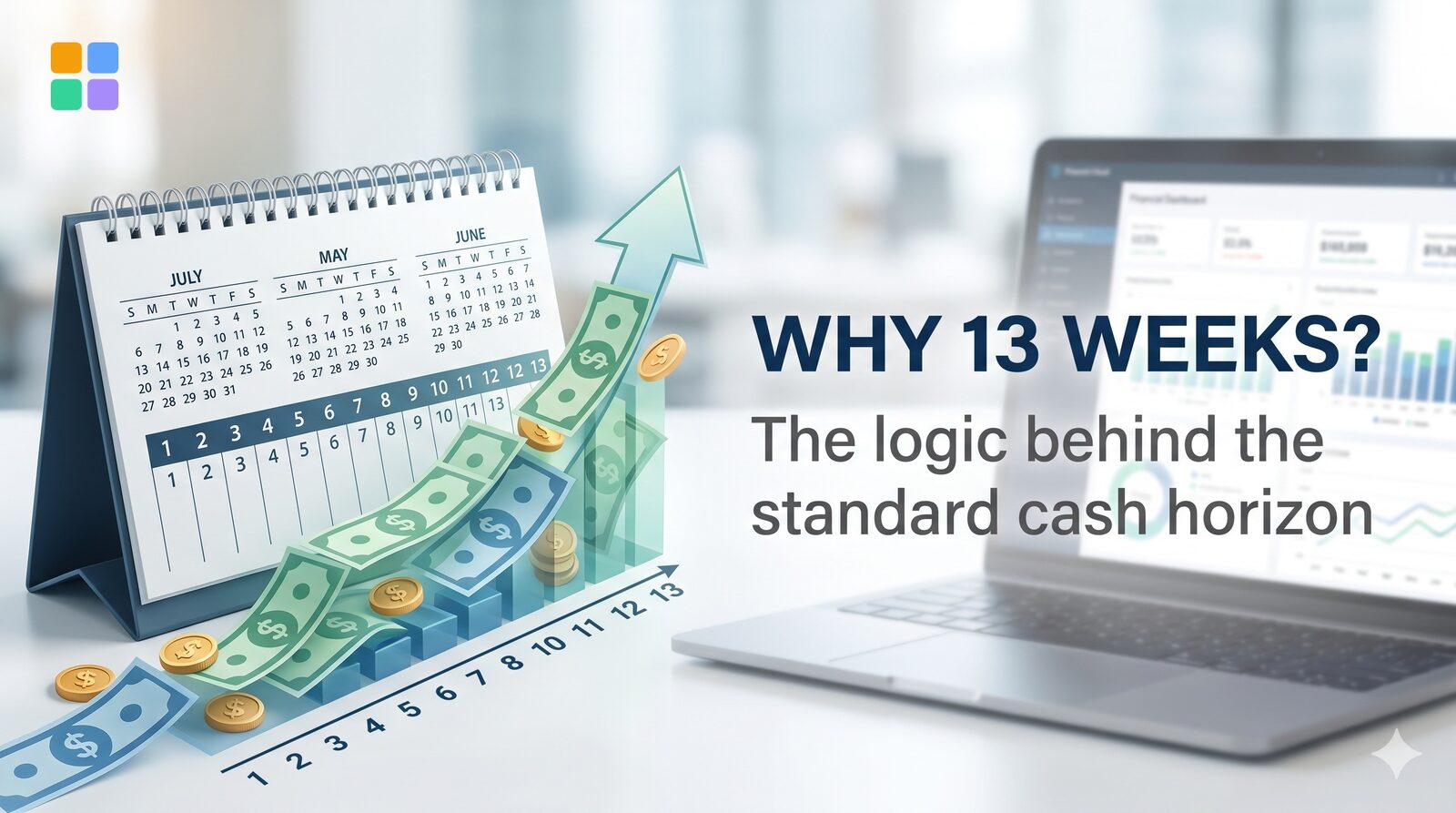
Why 13 weeks?
The most oddly specific number in finance: not a quarter, not ninety days, but exactly thirteen weeks. The precision isn't an accident. Why thirteen (a quarter counted in weeks), why weekly (cash crises don't respect month boundaries), and why it rolls: the turnaround origin, the standard lenders now demand, and the logic behind the standard cash horizon.
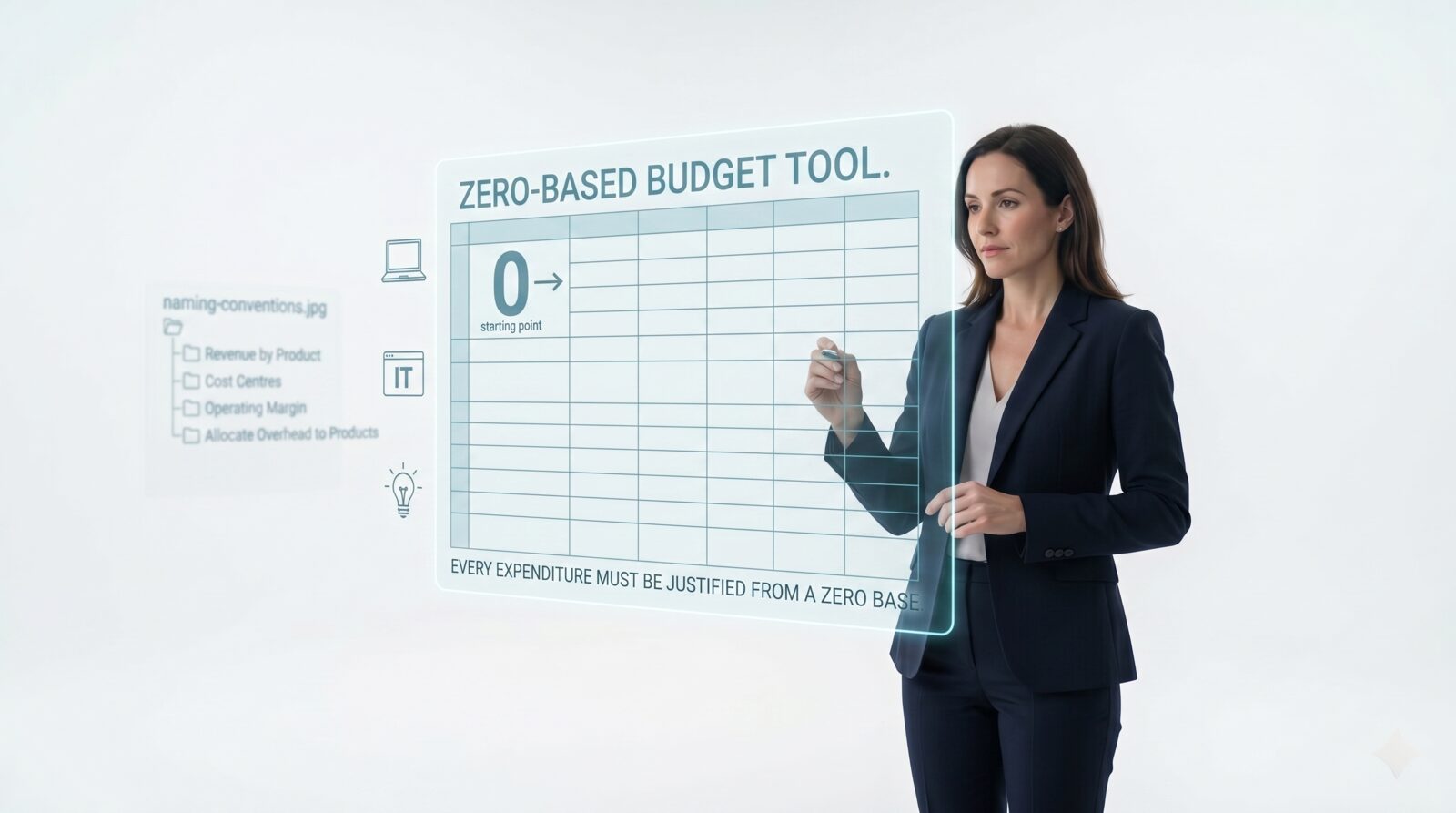
Zero-based budgeting
The most-promised, least-understood idea in budgeting: build every budget from nothing, justify every line, inherit no number. An honest assessment after the consulting gloss wears off: the real disease it cures, where it earns its keep, the famous case where it ate the seed corn, and the four pitfalls that sink most rollouts.

Time is the hardest dimension
It looks like the easy one (twelve months, four quarters, a year rolls over) and that familiarity is exactly the trap. Pull the thread on almost any modelling mess and you often find a time problem wearing a costume. The half-dozen ways time refuses to behave: more than one calendar, two relationships at once, grain, horizon, absolute vs. relative, and a past that won't stay put.

What is variance analysis?
The task FP&A performs more than any other, and the one most teams stop halfway through: they report the number and never reach the reason. What variance analysis is, the convention that trips everyone up (Actual − Budget, or Budget − Actual?), the price–volume split, and the wall it hits: where "which lever moved" can't tell you "what moved the lever".

Naming conventions that survive
Open a model you built eighteen months ago and you meet "Table1", "New Dictionary", "Link_final_FINAL". The model survived, its meaning didn't. Novi lets you name things in plain language; this is how to spend that freedom well. Five habits, a cheat-sheet for every artefact, and the one test that tells you whether a name will last.
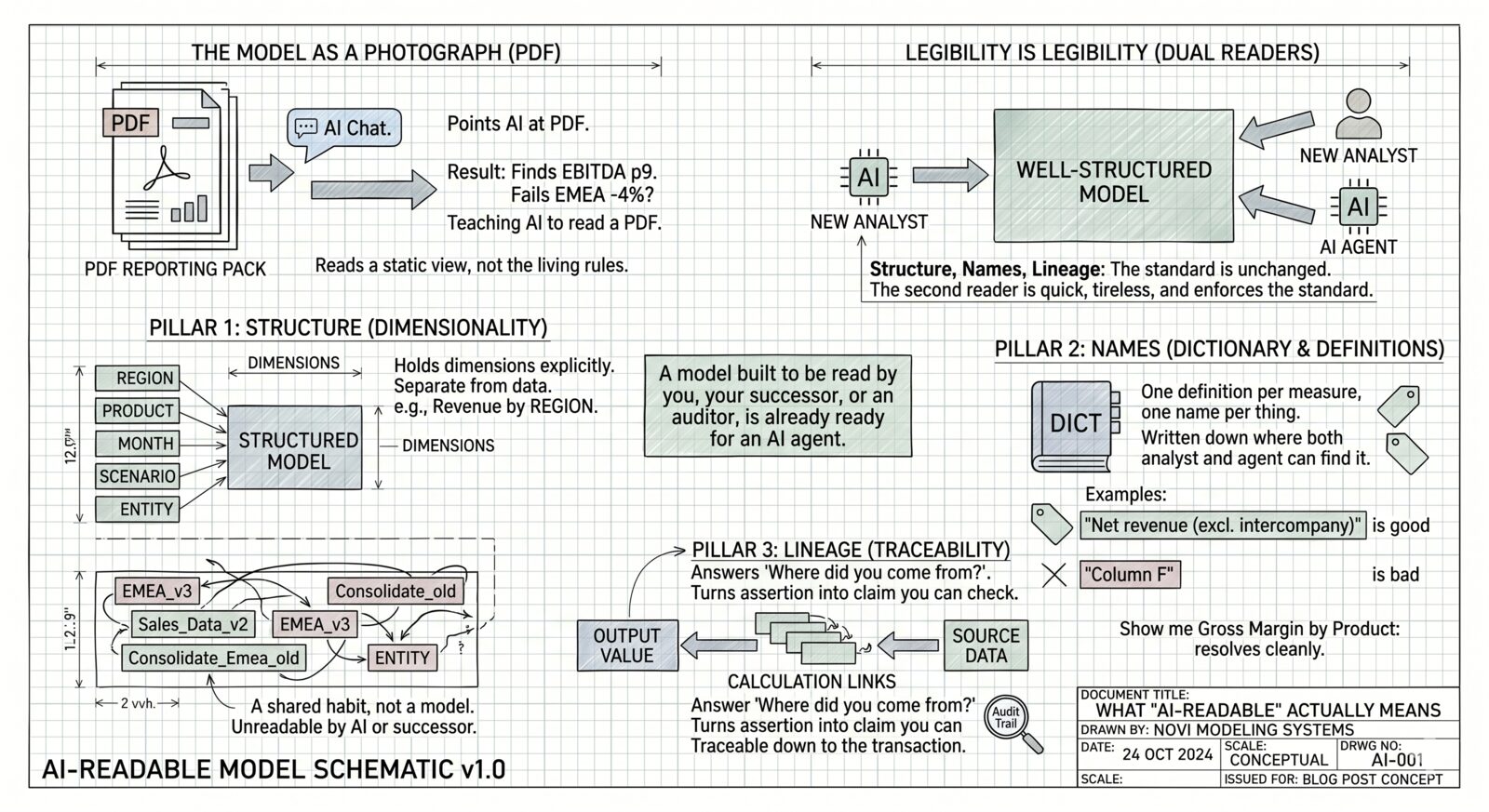
What "AI-readable" actually means
Every platform promises your numbers are "AI-readable". Almost none say what it means. It comes down to three old finance virtues: structure, names and lineage. A model an AI can read is the same model a new analyst can read on their first morning. Score yours against eight questions, none of which mention AI.
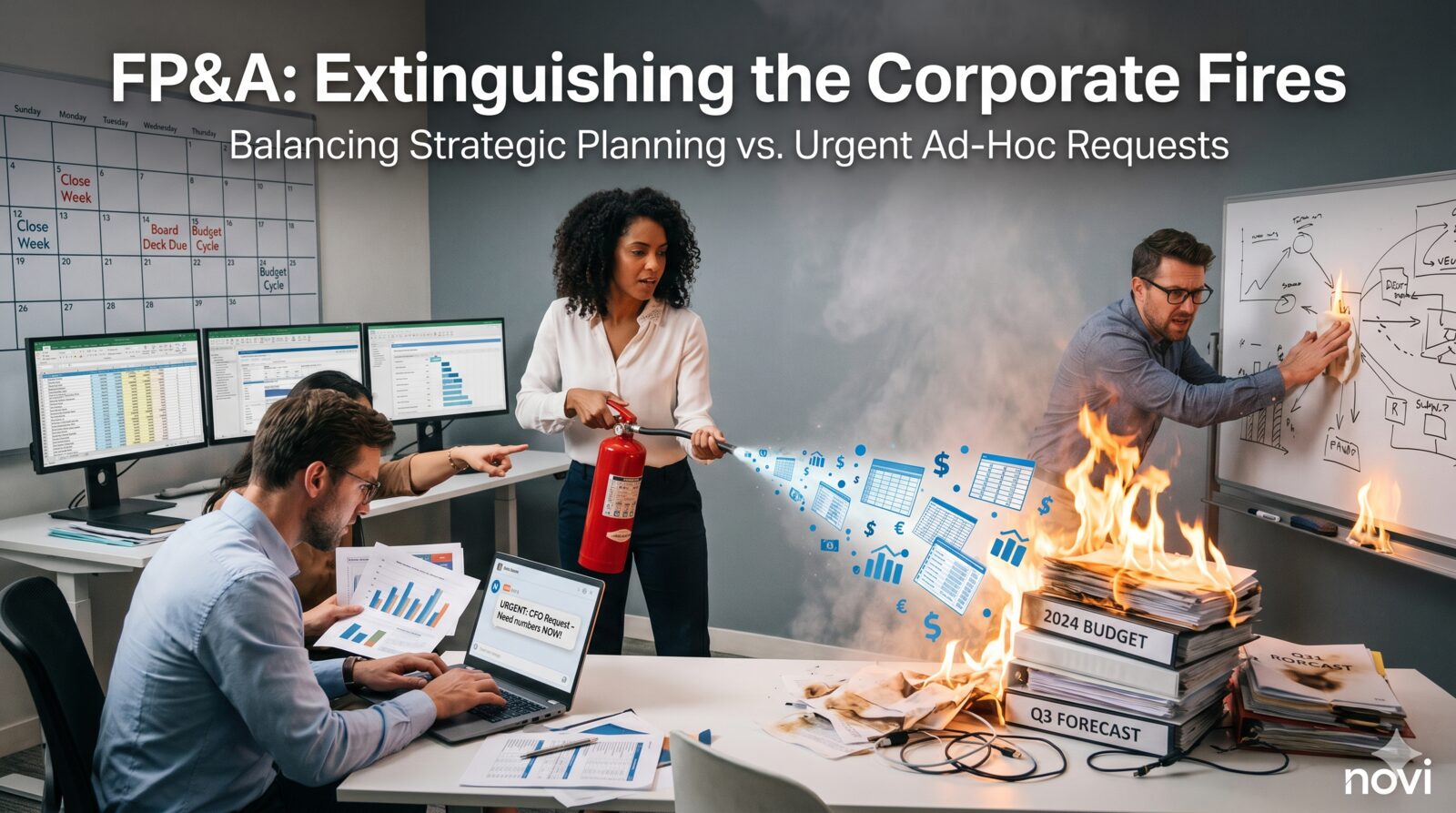
The fire drill always wins
Finance keeps two calendars (the scheduled one on the wall and the one with no dates on it) and the second wins almost every time. Part of that firefighting is the permanent nature of the job; a good deal of it is not the question's fault but the model's. Why budgeting takes three months, and what can actually change.
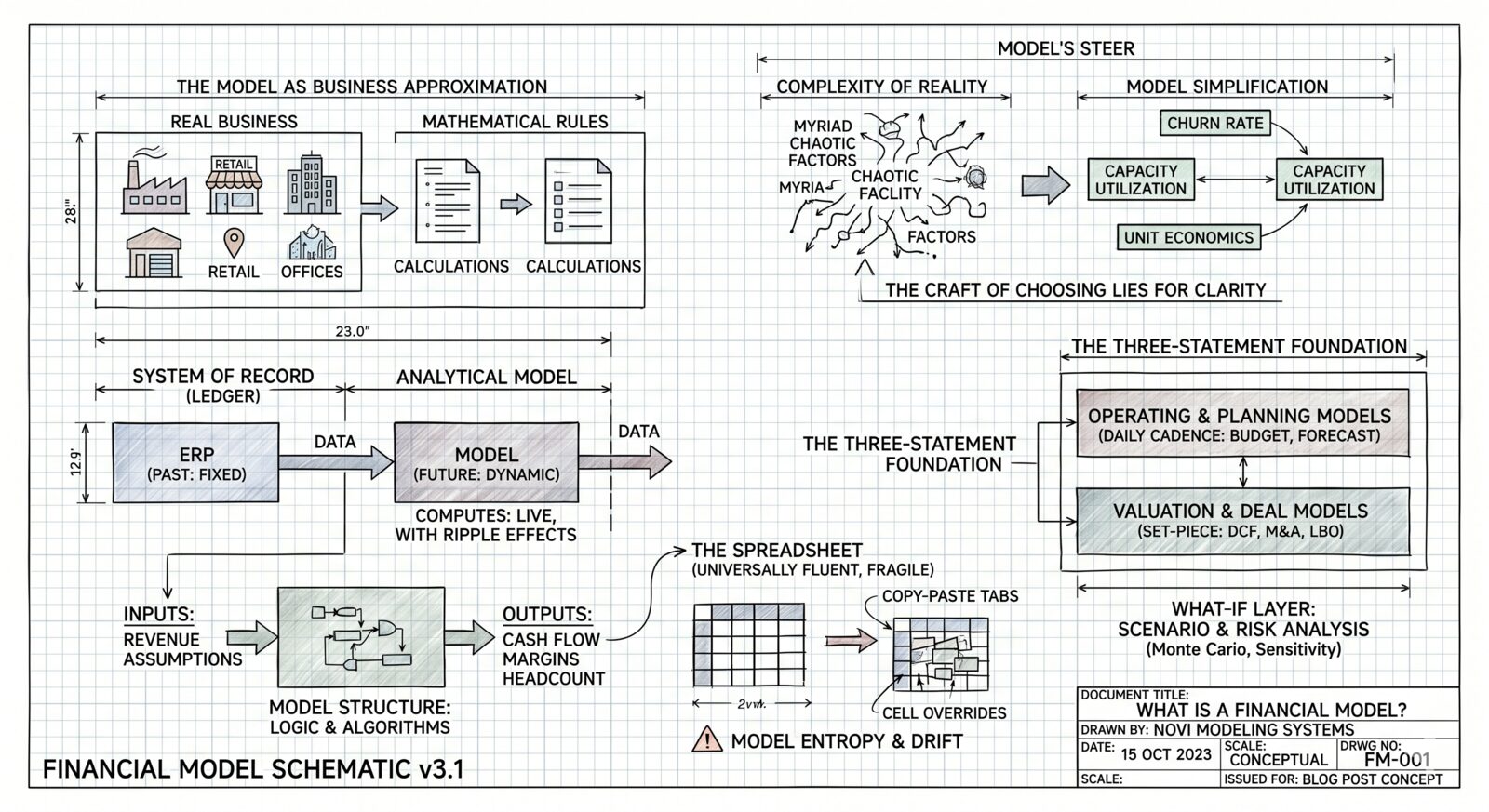
What exactly is a financial model?
A plain-language definition (clear enough to explain to your boss or your child) and a tour of the families of model finance uses. What a model is, why it's always an approximation, how it differs from a system of record, and the valuation, operating and what-if families.
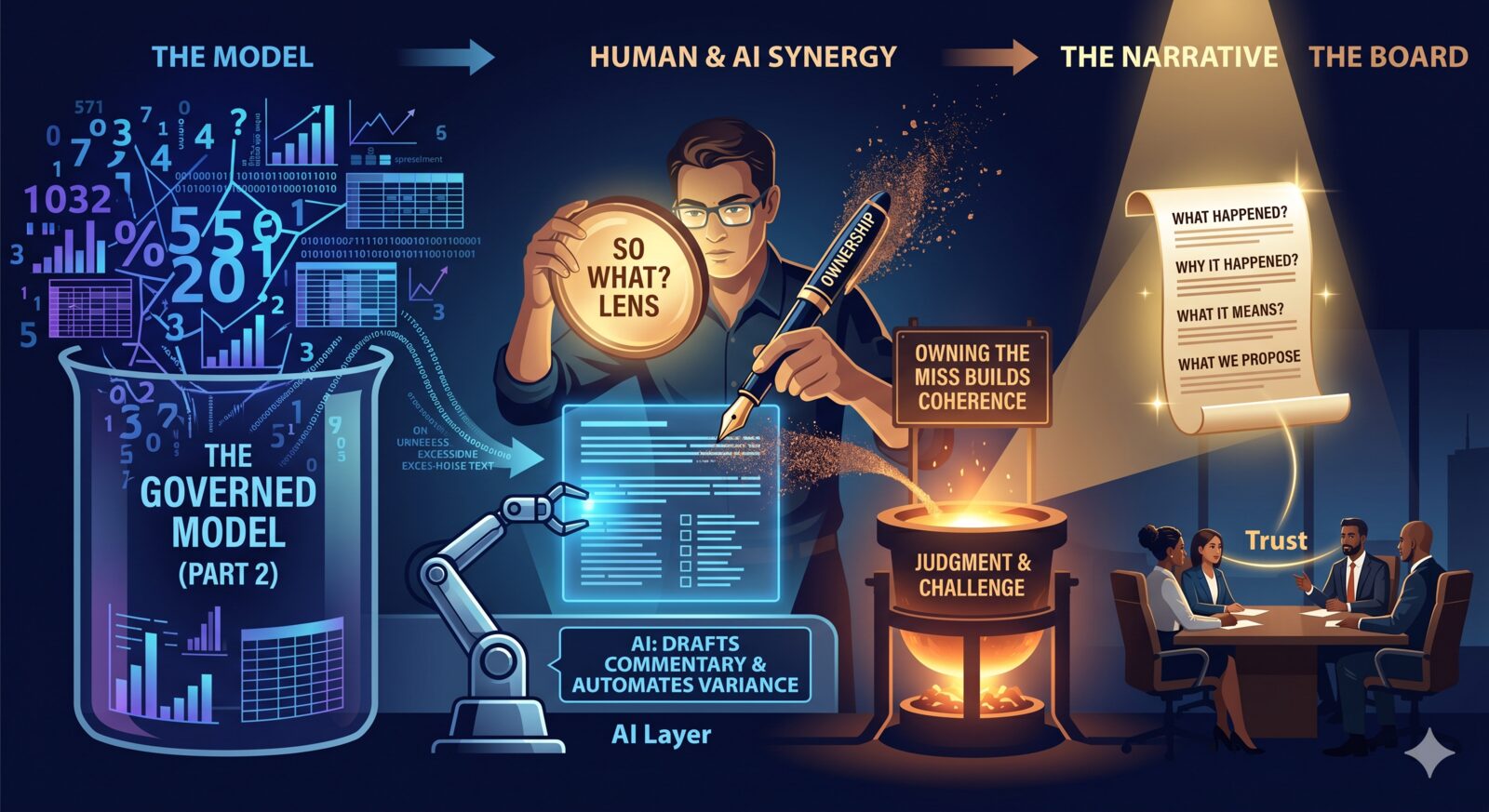
From numbers to narrative: storytelling as a core function
A model can be perfect and still worth nothing, because it does not attend the board meeting. On finance storytelling as a core function (the four questions, the one-page pack, narrating the miss) and why AI drafts the story but must never hold the pen on the conclusion. The finale of the series.
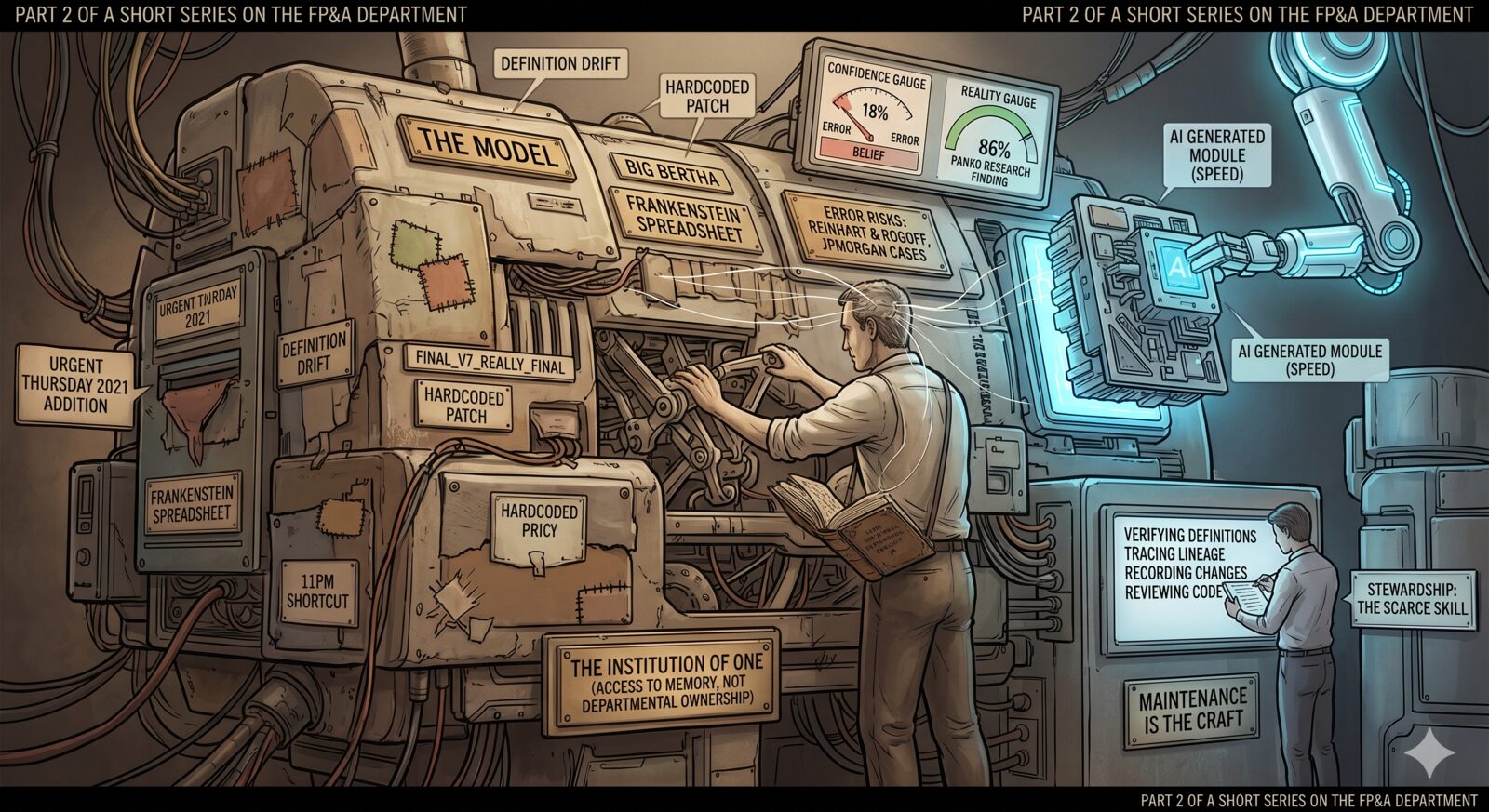
The craft: building models, and keeping them alive
Models don't break. They decay. How planning models are born and why they rot; what the research says about spreadsheet errors and the 18%-vs-86% overconfidence gap; the model owner who is an institution of one; and why AI makes building faster but owning no faster at all. Part 2 of a short series.
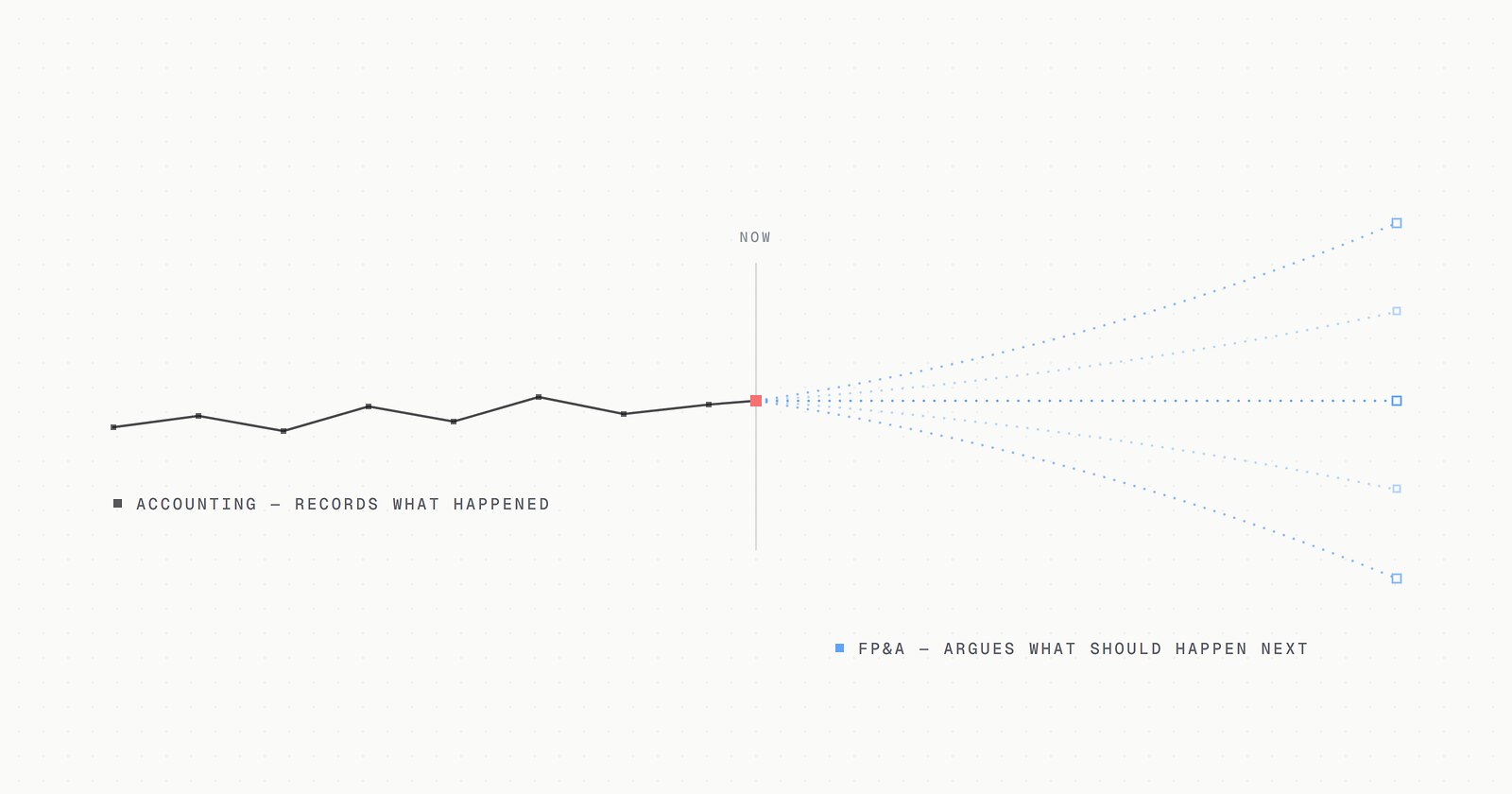
What is an FP&A department actually for?
Accounting records what happened; FP&A argues about what should happen next. Thirty years alongside finance departments, written down honestly: the mandate, what the function is not, the three organisational shapes, and the unnamed model owner whose departure quietly kills planning models. Part 1 of a short series.

Every Engine Is a List of Debts
An architecture is not a triumph. It is a list of debts, and the only difference between engines is which creditors they chose. SFMT, the engine beneath Novi, explained engineer to engineer: the latency paradigm, the grid, append-only recalculation, the four debts we refused, and the bills we pay instead.

Where the Engine Sits
A conversation with a serial company-builder. Every company runs on three layers: a transaction layer where data is born, a process layer that runs the business, and an analytical engine on top. Keep the engine free of process weight, and the company can think.

Do we really need an EPM?
Or would a modelling platform be enough? Finance logs into the EPM, exports to CSV, then builds the real model in Excel, because the model is where finance thinks, and Excel is the last place it still owns the model end to end. The case for a modelling platform, not a planning suite.
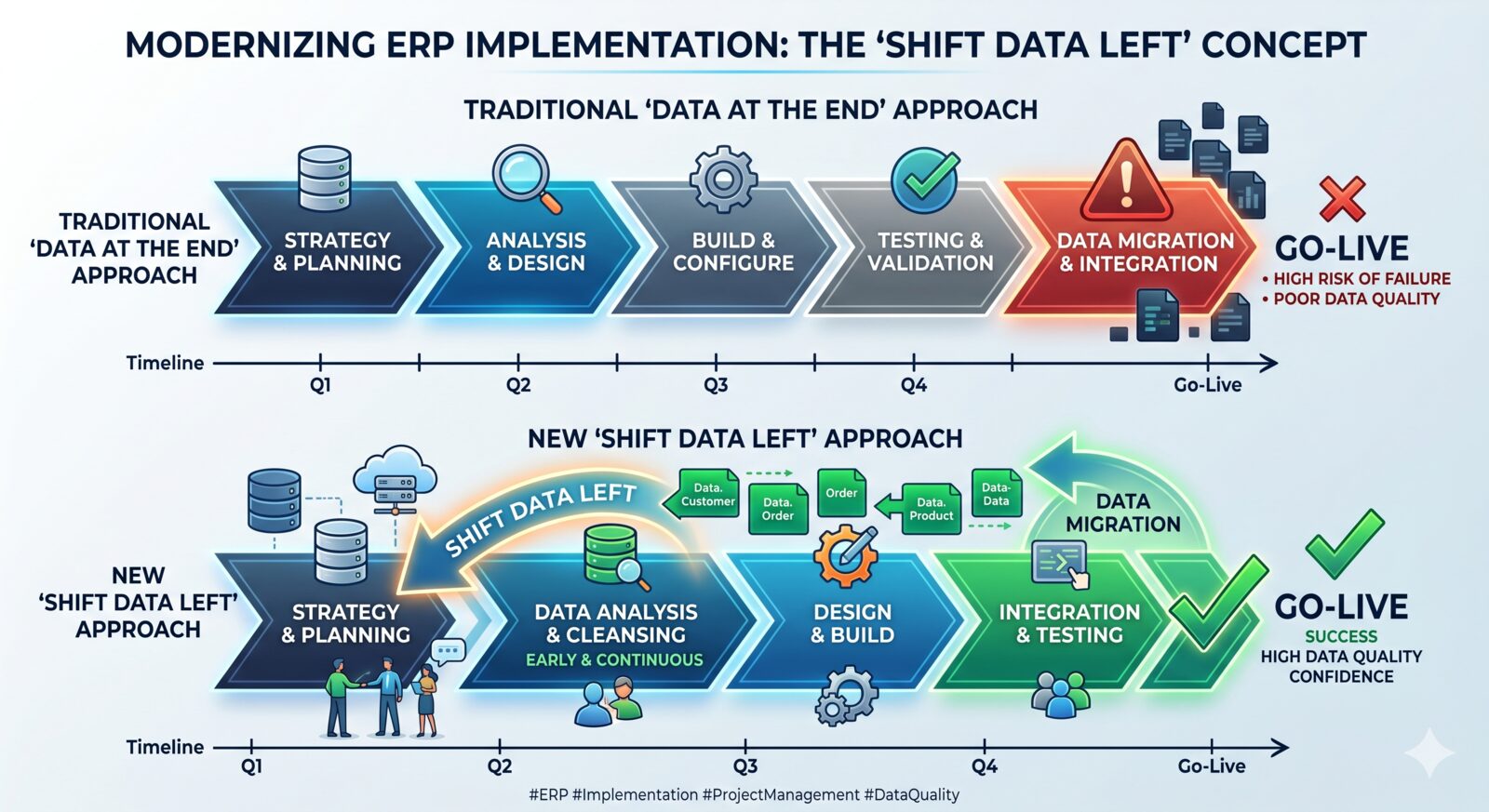
Shift Data Left
Why ERP and EPM projects look perfect on paper and fall apart at the finish line. Data isn't a final checkbox on the right of the timeline. It's the foundation. Drag migration, cleansing and profiling to Day One, and go-live becomes a non-event.
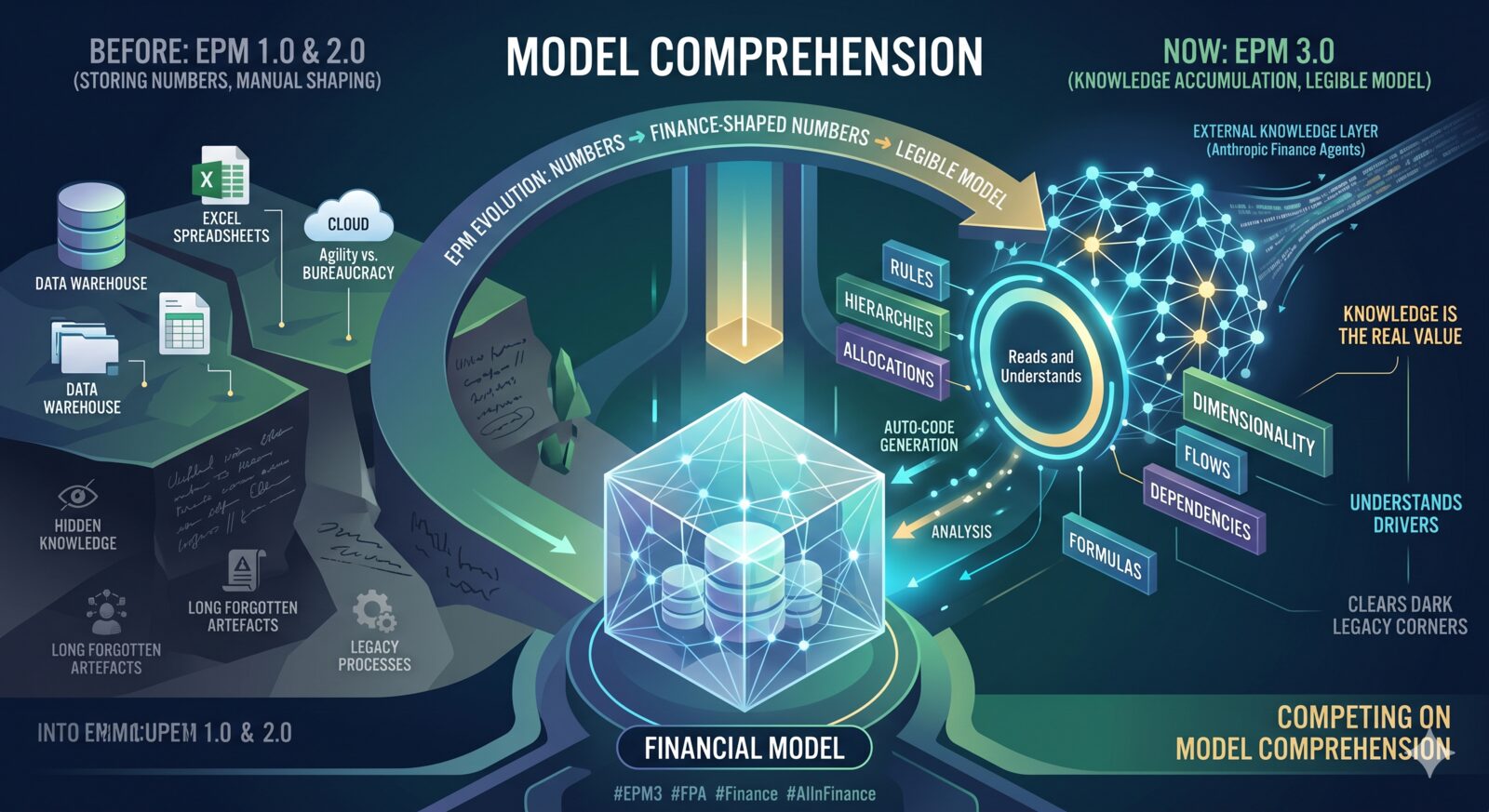
EPM 3.0: model comprehension
Hidden knowledge and forgotten artefacts are said to block AI in finance, but AI might be the remedy. Its overlooked value isn't automation, it's the accumulation of knowledge: an agent that understands every driver, formula and dependency, dark legacy corners included.

EPM 3.0: the readable model
Every fifteen years, enterprise planning reinvents itself. EPM 3.0 isn't another platform, and it isn't a bot drafting your board pack. It's AI that comprehends the entire model: every formula, driver and relationship, legible at once. The next platforms will compete on whether their model can be read.
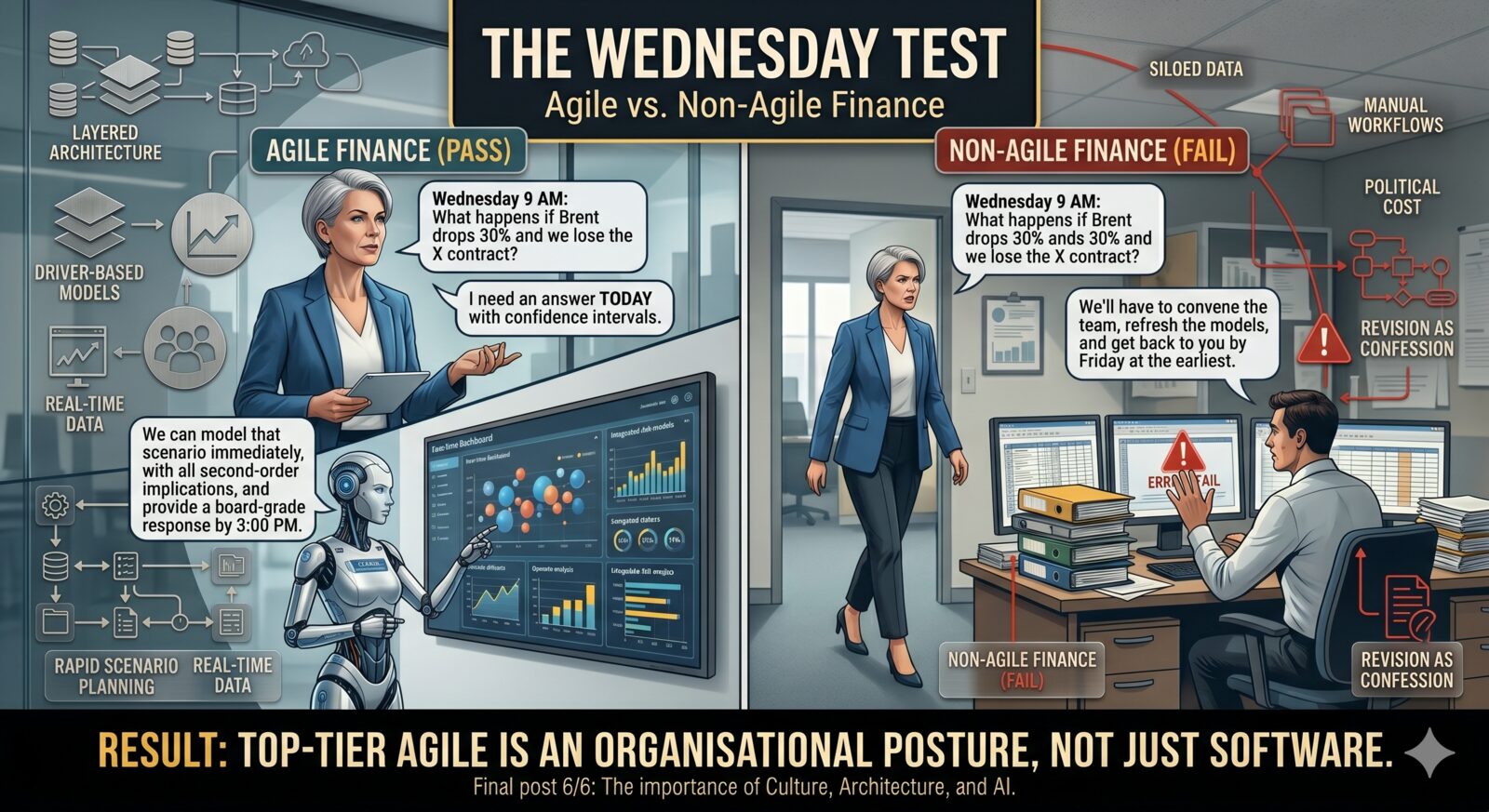
The Wednesday Test
Finale of the Agile Finance series. The CEO walks in unannounced and asks what happens to your covenants under a shock. A board-grade answer that same day, or not. The binding constraint it exposes isn't tools or talent. It's culture.
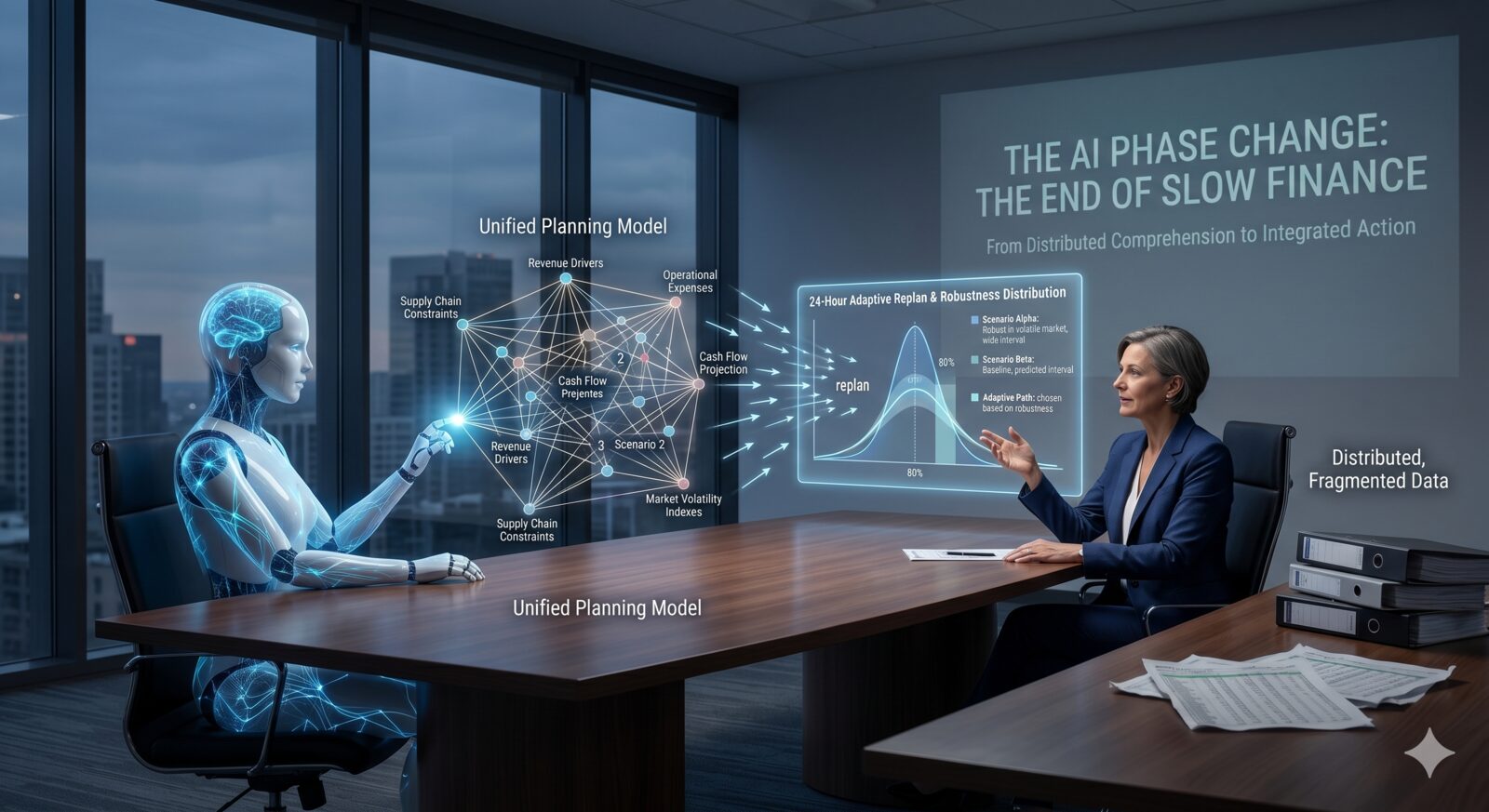
The AI Phase Change
Part 5 of the Agile Finance series. The productivity story about AI in finance is true, and small. The real phase change is the collapse of the model-comprehension bottleneck. The prerequisite isn't the model. It's the semantic clarity of the model.
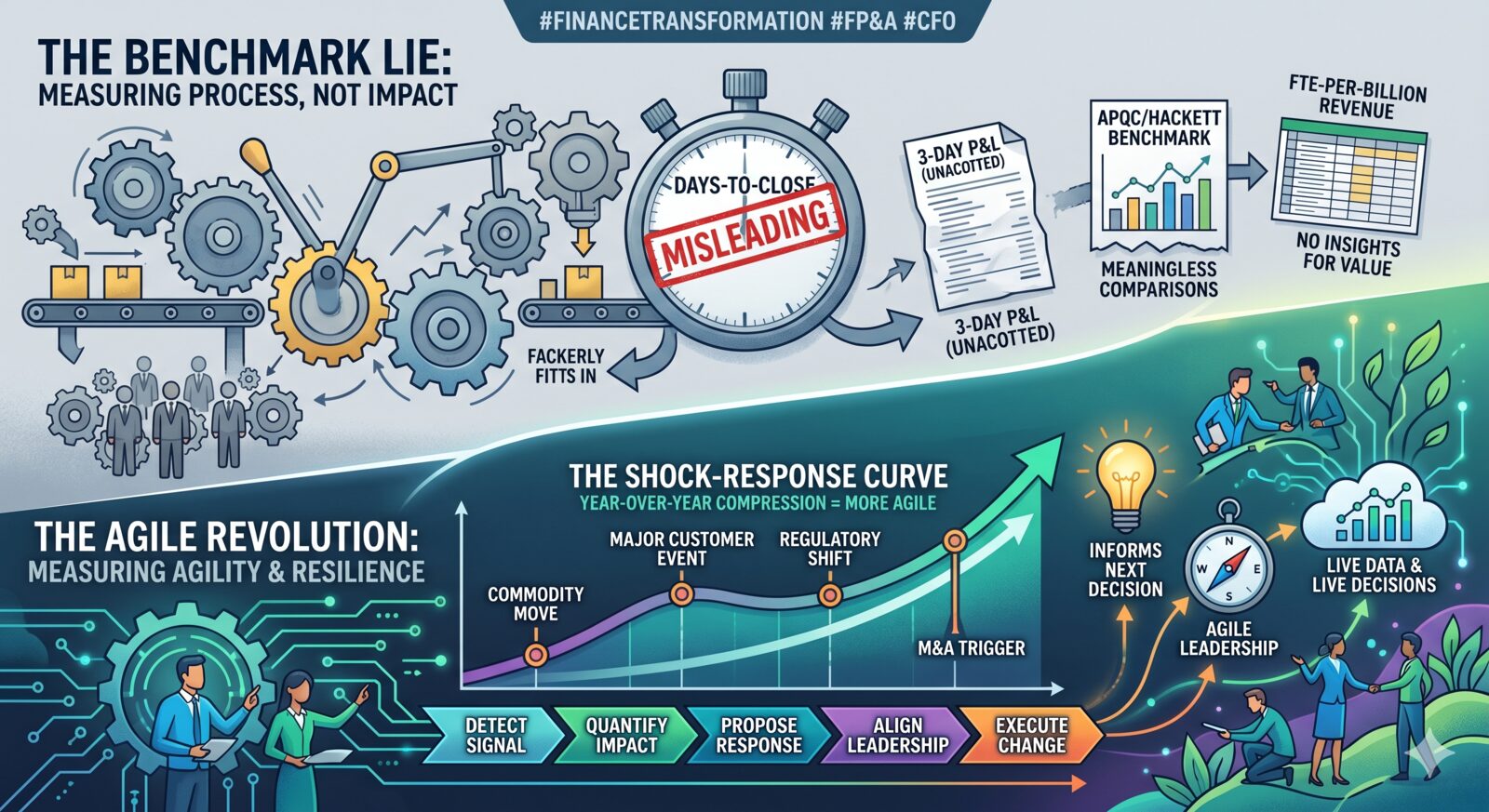
The Benchmark Lie
Part 4 of the Agile Finance series. Days-to-close, APQC, Hackett: they measure what's easy to count, not what's hard to do. The benchmark worth using is the shock-response curve. If it doesn't compress year over year, your technology investment is paint on rust.
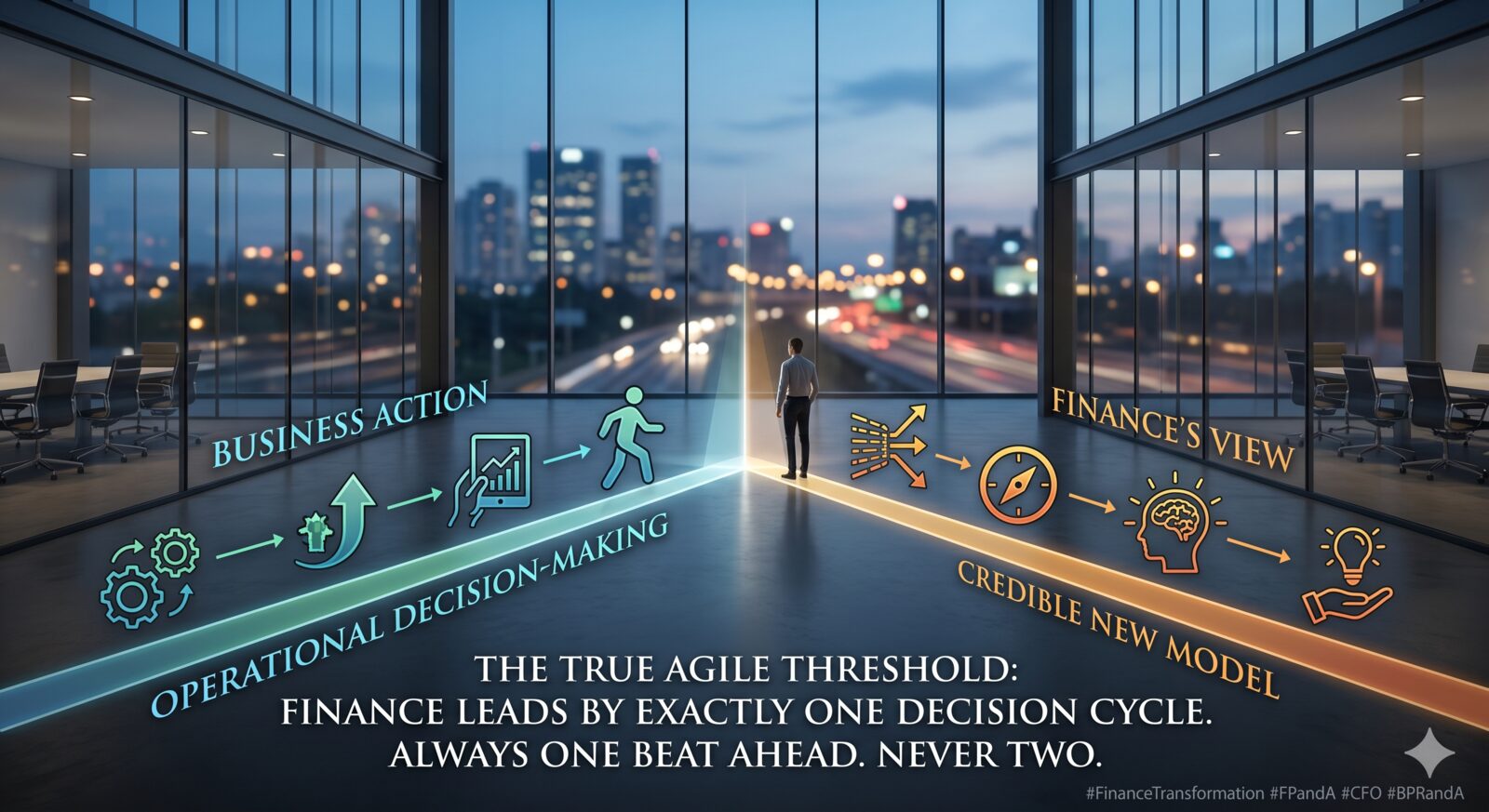
The Threshold
Part 3 of the Agile Finance series. "Are we agile enough?" is the wrong question. Agility is relative to the volatility you face. The real threshold: finance leads operational decisions by exactly one cycle. One beat ahead, never two.
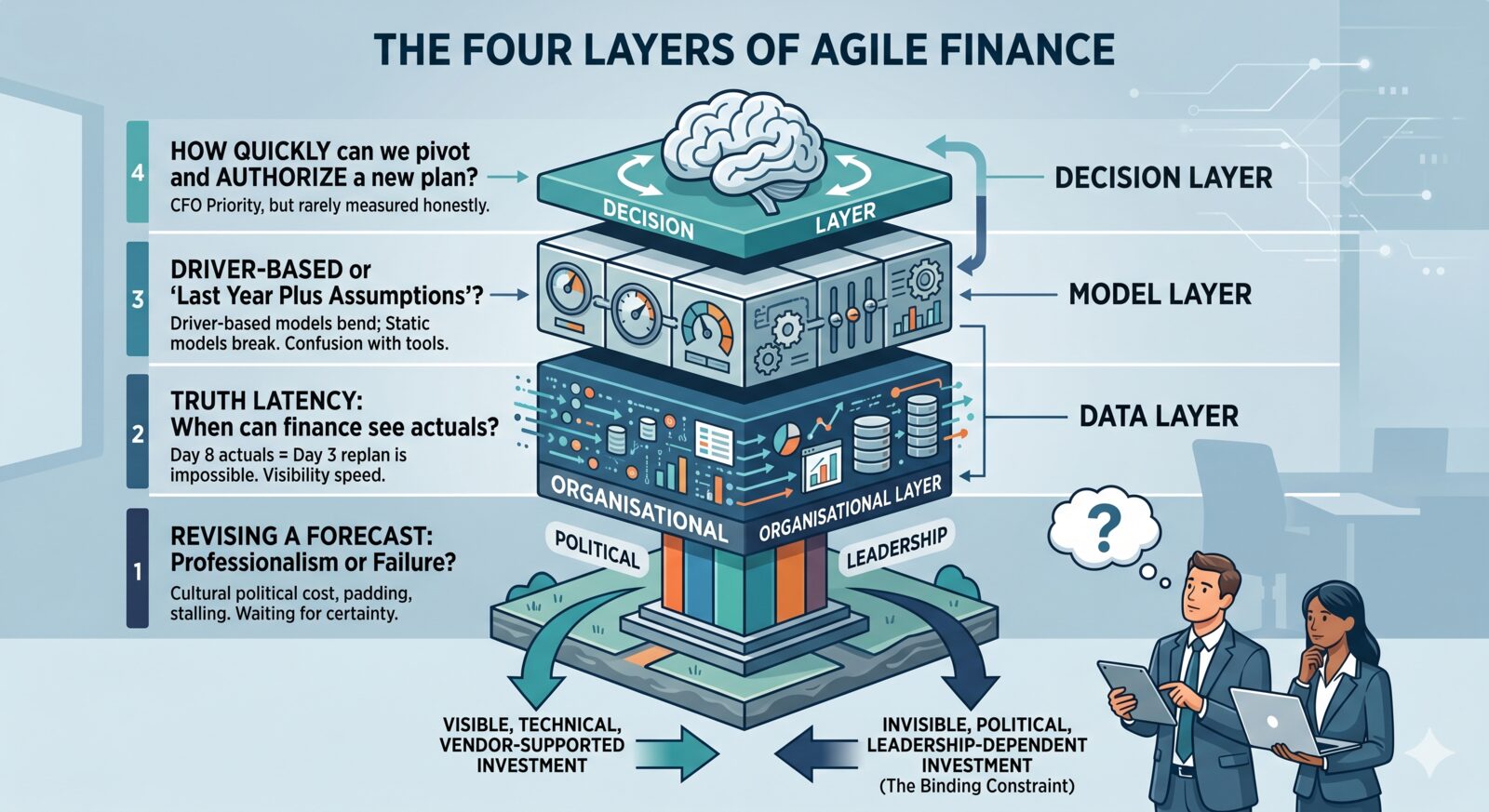
The Four Layers
Part 2 of the Agile Finance series. Agility lives in four layers: decision, model, data, organisational. Most teams buy the visible ones and under-invest in the invisible ones that actually bind. You cannot buy your way out of the organisational layer.
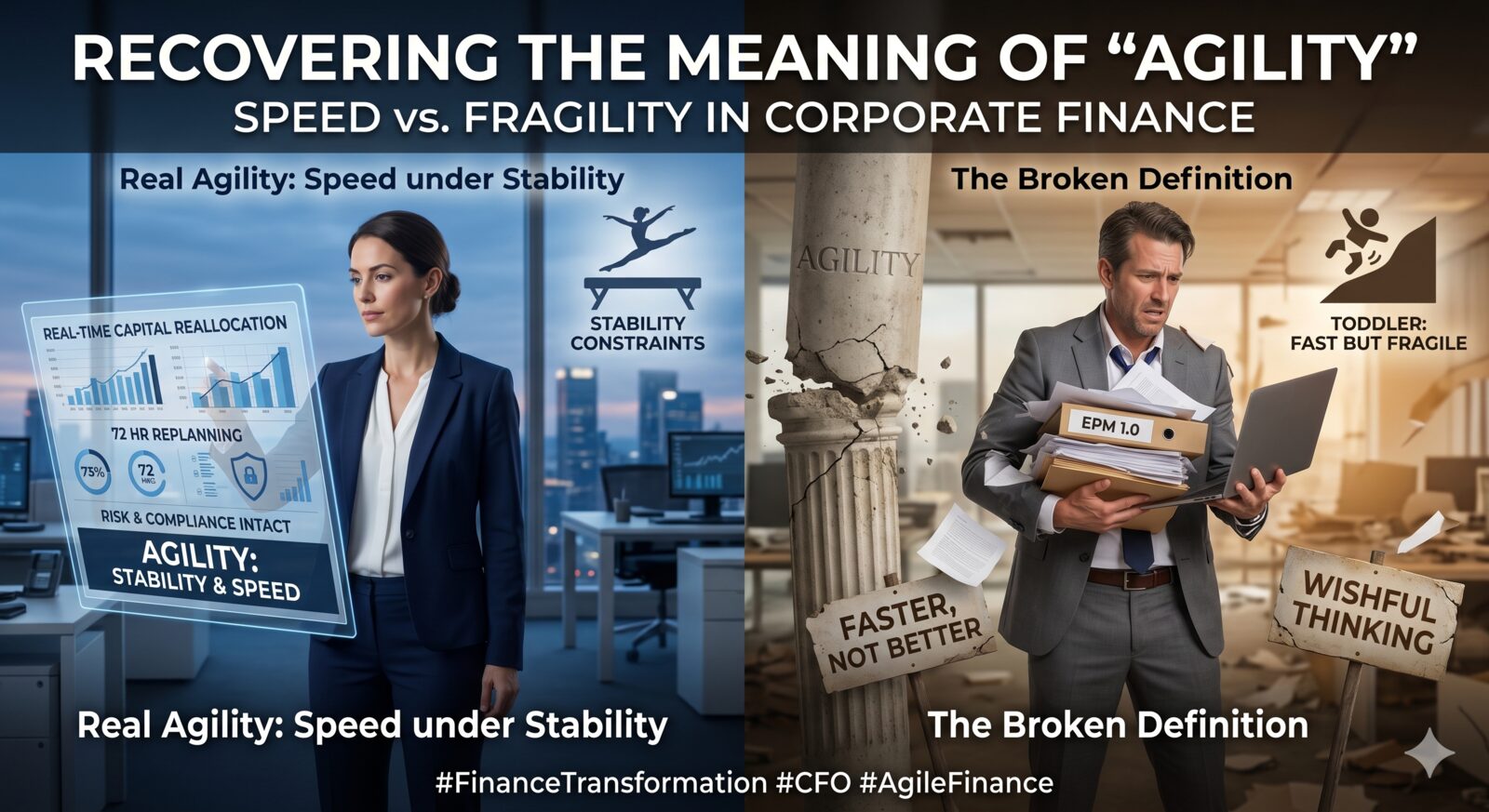
The Word We Broke
Part 1 of the Agile Finance series. "Agile" usually means "faster without changing anything structural". That's wishful thinking, not agility. A gymnast is agile; a toddler running downhill is just fast. Recovering what the word should mean.

The CFO isn't evolving. The toolkit is
"The CFO role is evolving": the same article, a thousand times, each as breaking news. After 30 years in enterprise finance: the CFO was always strategic. What changed is the tools, the data, the latency. The offering is finally catching up.
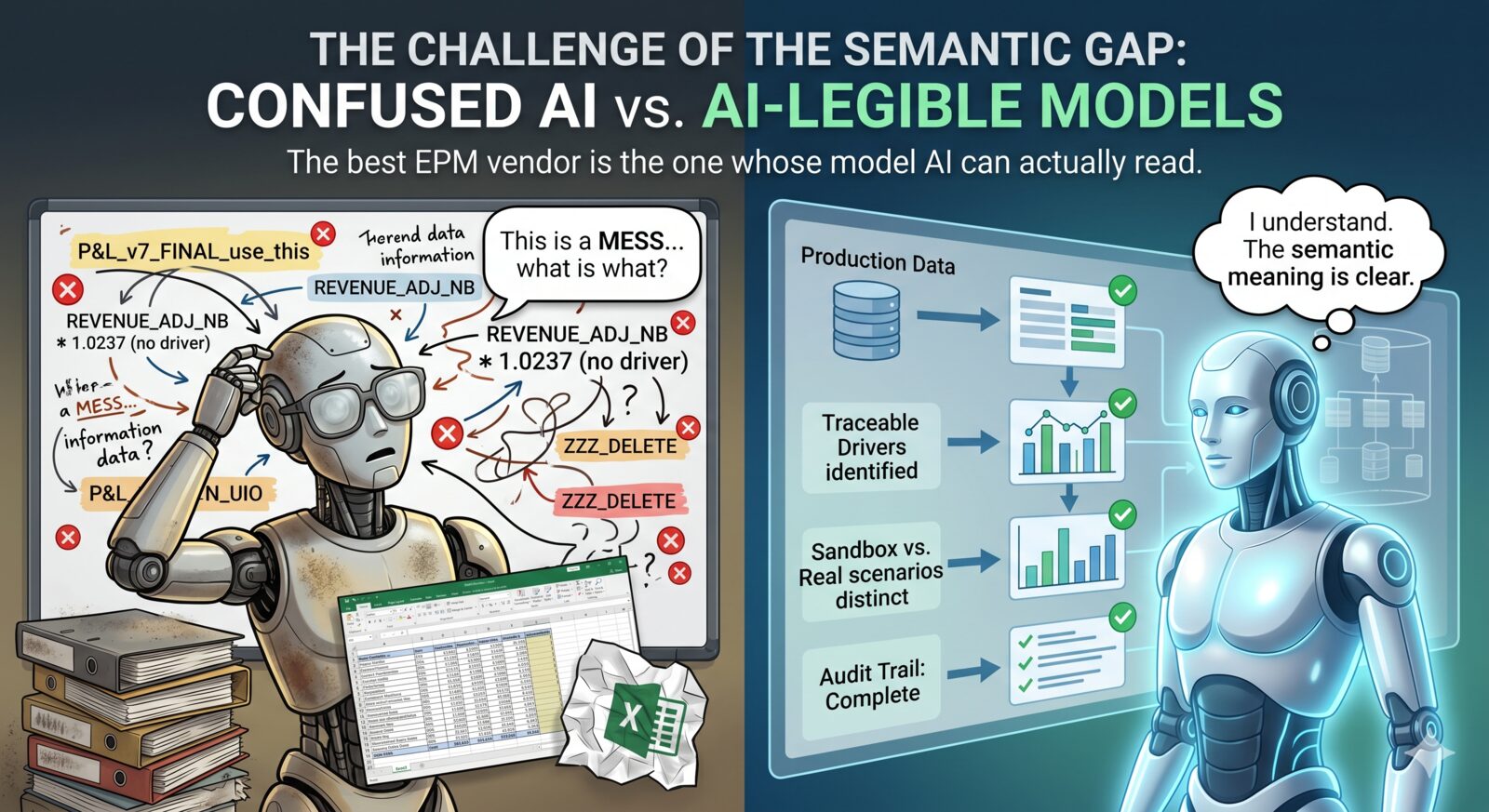
Whose model can the AI actually read?
Every EPM vendor is racing to bolt AI on top. It's a sideshow. Hand an agent the keys to a real tenant (14 P&L modules, a ZZZ_DELETE cost centre still wired into live formulas) and it will sound brilliant, and be wrong. Five questions to ask any vendor.
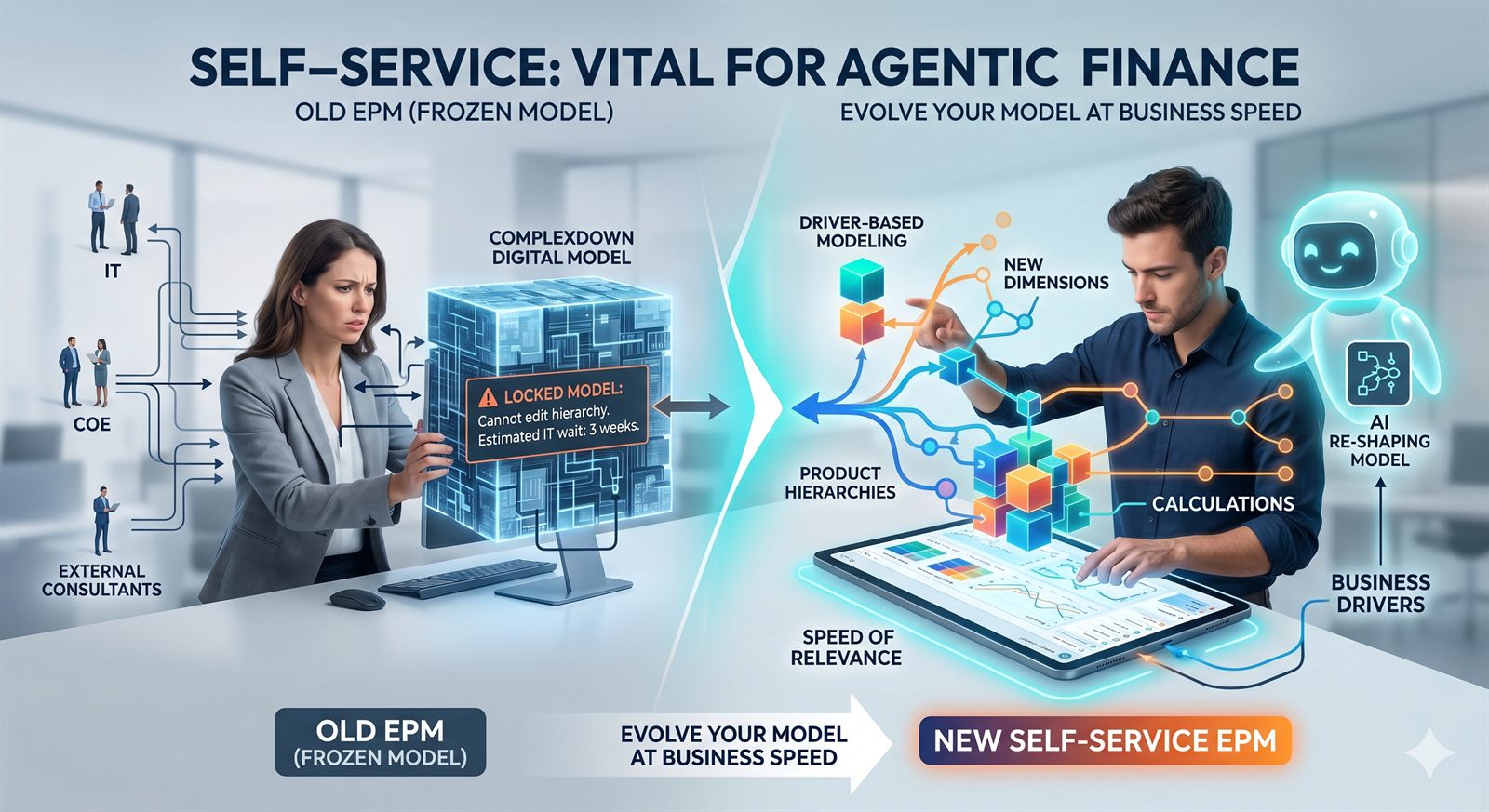
What self-service in EPM actually means
One of the least-defined phrases in enterprise planning. Not editing assumptions on a dashboard: re-shaping the model itself, at the speed the business changes. And why it's the same property real AI in finance depends on.
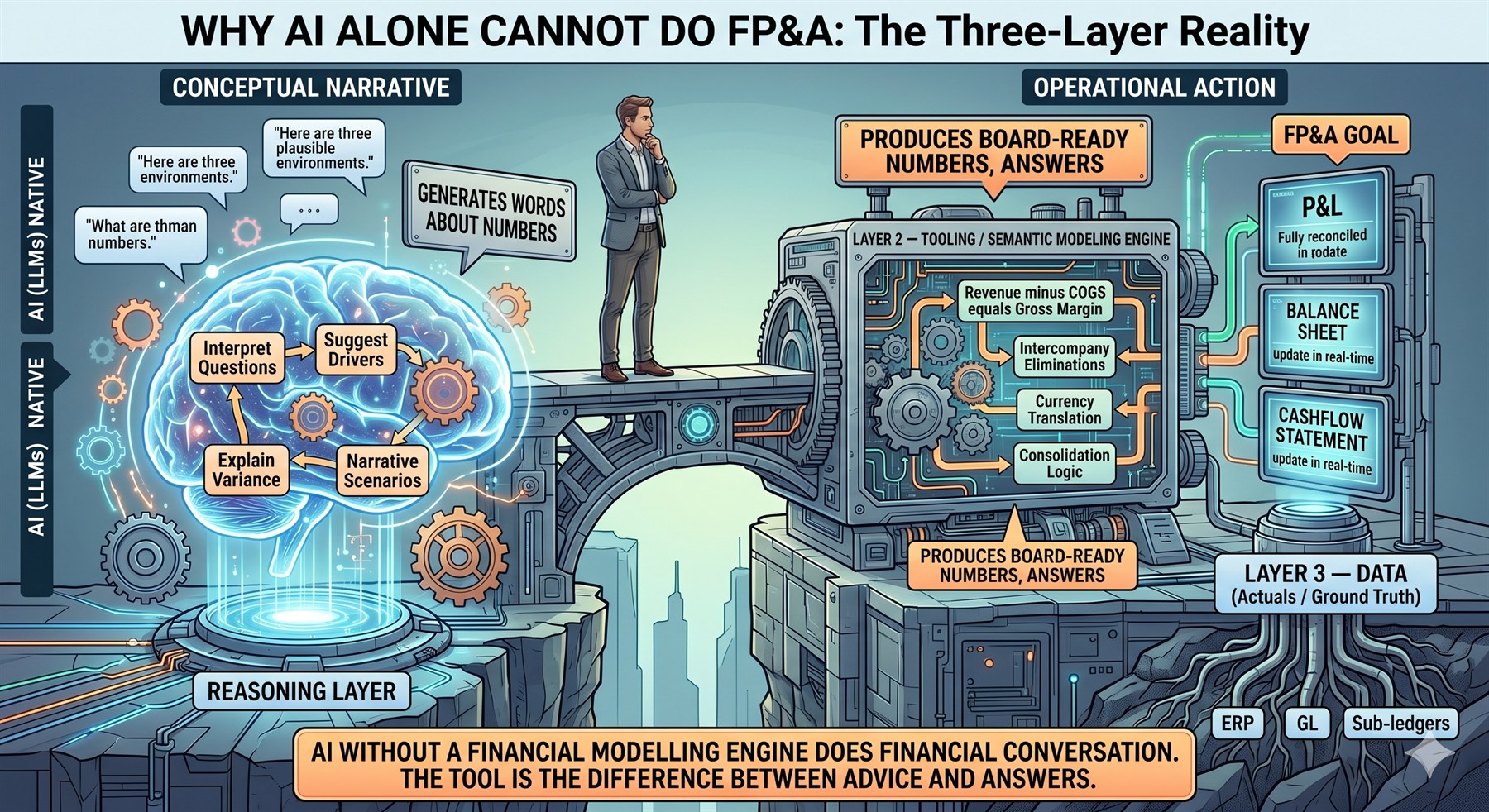
Why AI alone can't do FP&A
An LLM can write three plausible scenarios. It can't produce a reconciled P&L, balance sheet and cashflow under each. Why FP&A needs a modelling engine underneath the AI, not just words about numbers.
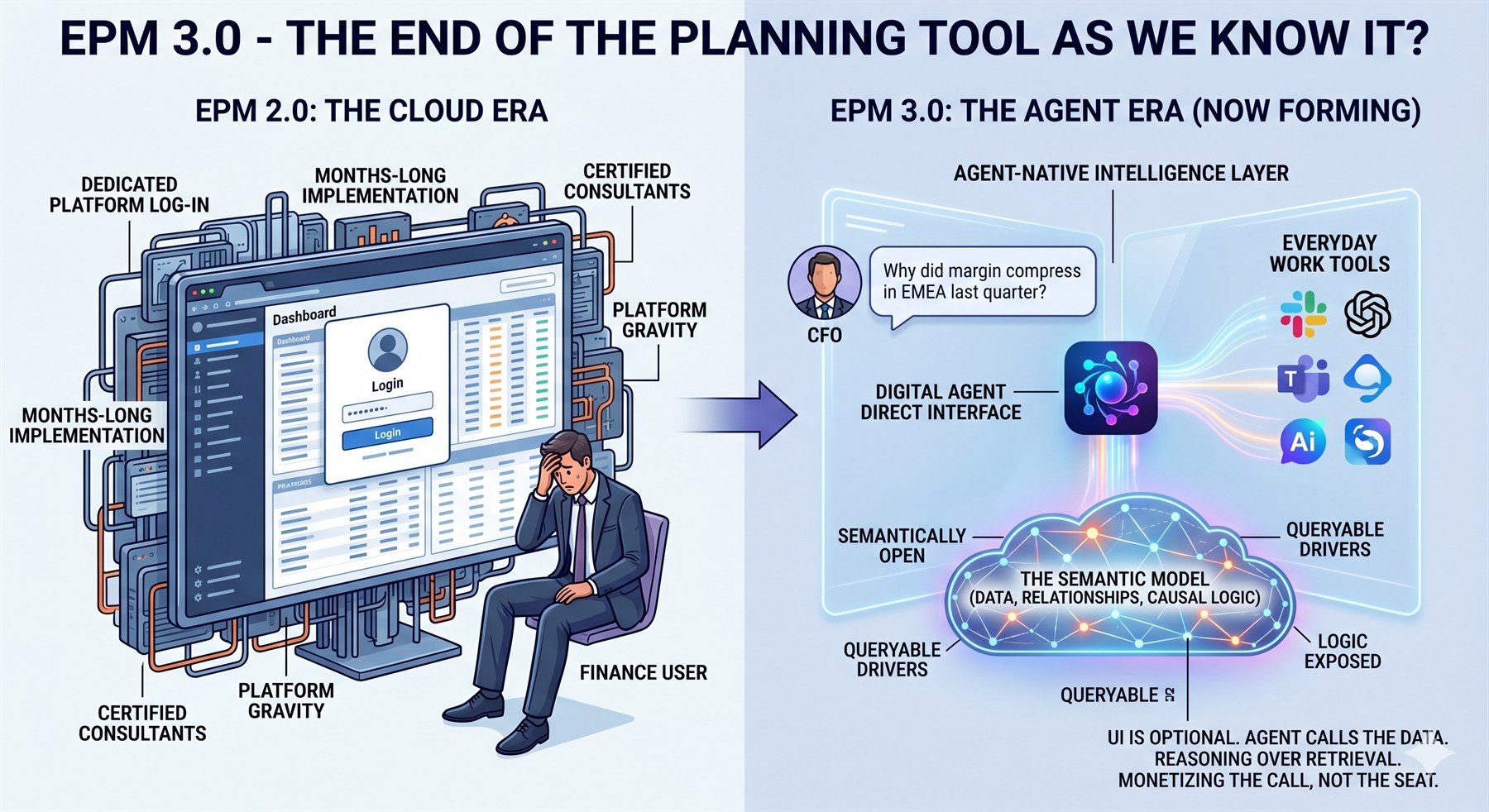
EPM 3.0: the agent era
Not the work: the category. Enterprise planning in three eras: IT, cloud, and now agents. Why the platform you log into is the shape of the last era, and a copilot bolted onto a destination is still a destination.
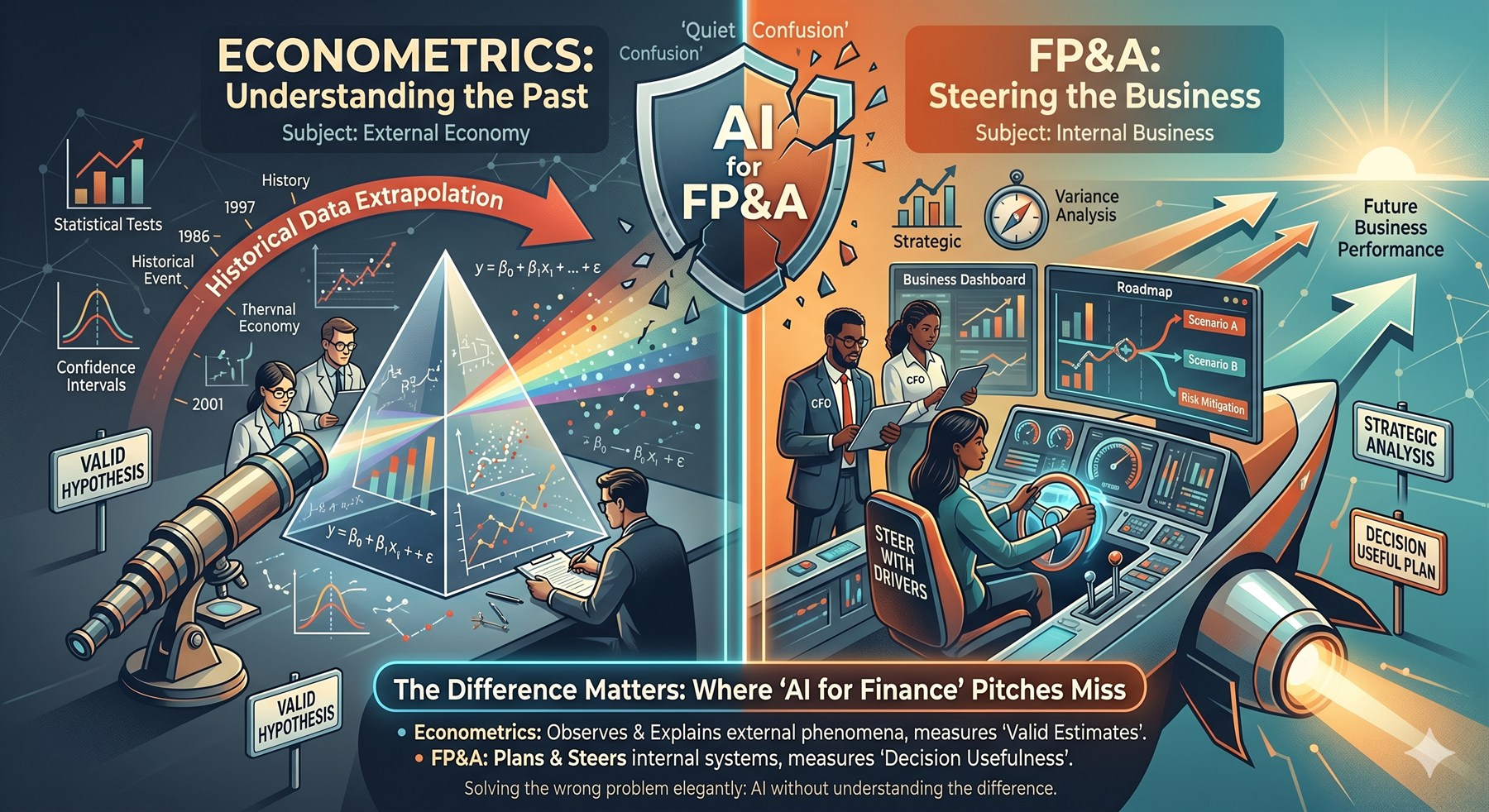
Econometrics vs. FP&A
They share a toolkit but answer different questions. One understands an external economy; the other steers an internal business. Why most "AI for finance" pitches keep solving the wrong problem, elegantly.

The hidden value of FP&A
What is financial planning actually worth? A $50bn question hiding in plain sight, and why the prevention paradox makes it so hard to answer.

The model marketplace revolution
The founders on building a painkiller for FP&A: production-ready models you own and modify yourself, no consultants required.
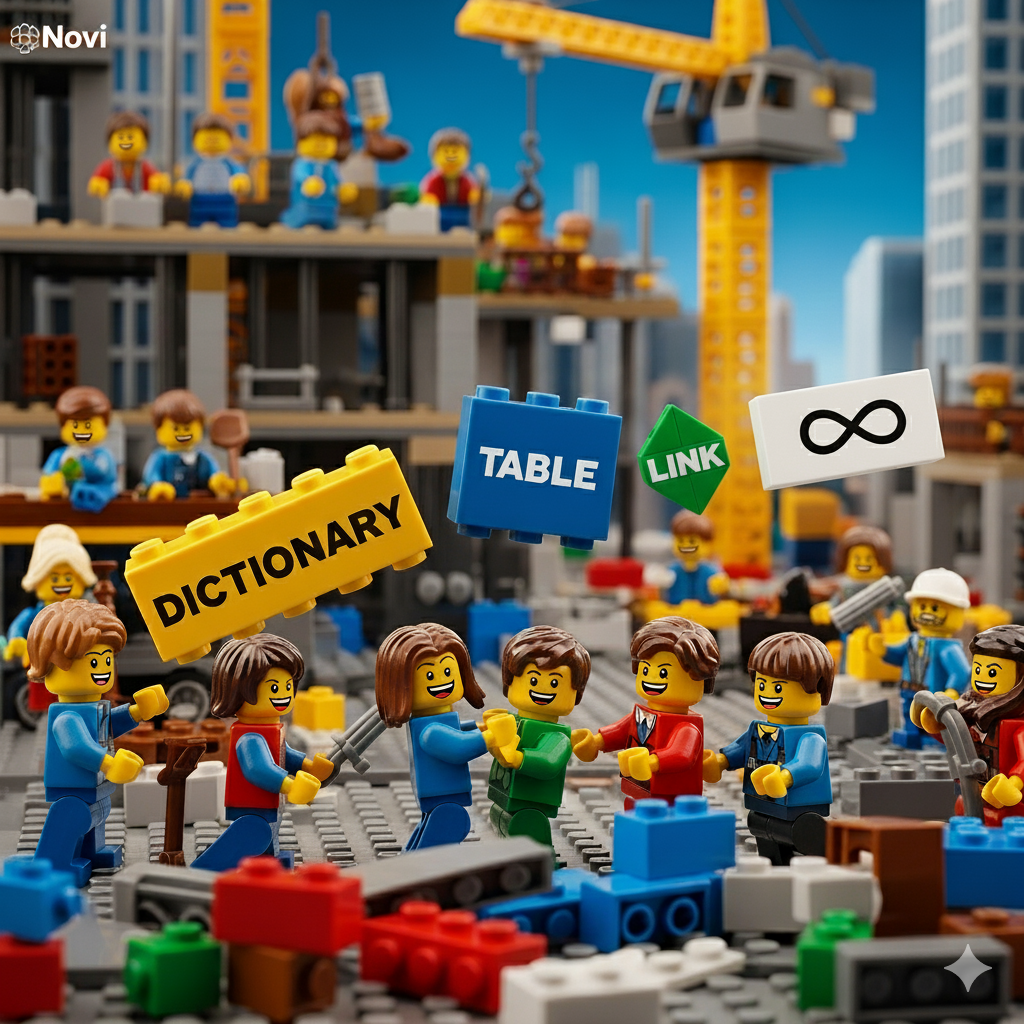
Three building blocks: the DNA of every financial model
Dictionaries, Tables, and Links. That's the whole alphabet, and it's enough to model any business on earth.

The puzzle of a perfect team
Google spent two years and 180 teams to find the one thing that makes a team work. It turned out not to be talent.
No posts in this category yet.
Build with us.
Novi is being built in the open. Join early access to follow the work, and to shape the platform while it's still taking its shape.